

Common Challenges in Underwater Construction Projects

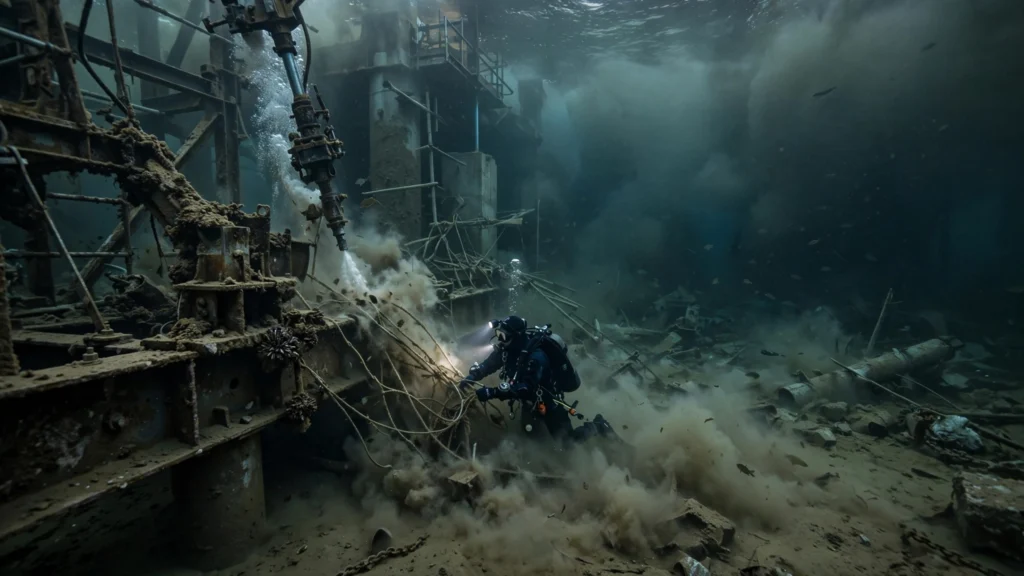
Underwater Construction Projects demand advanced engineering, strict safety standards, and accurate planning from the first survey to final inspection. These projects support bridges, tunnels, ports, offshore platforms, pipelines, and renewable energy systems. Every stage involves technical decisions that directly affect quality, cost, and long-term performance. Successful outcomes depend on reliable equipment, skilled professionals, and proven construction methods.
We see growing investment in marine infrastructure as global trade, offshore wind farms, and coastal protection projects expand. According to industry reports, governments and private developers continue increasing spending on maritime infrastructure worldwide. However, changing water conditions, limited visibility, and environmental regulations make every project more complex. Understanding these challenges helps engineers reduce risks while improving productivity and project success.
Why Underwater Construction Projects Are More Complex
Environmental Conditions Create Constant Risks
Unlike land-based construction, Underwater Construction Projects operate in unpredictable environments. Water currents, tidal changes, waves, and pressure affect workers and machinery every day. Even minor environmental changes can delay operations or require updated engineering plans.
Marine sediment also reduces visibility, making inspections difficult. Divers often work with visibility below one meter in busy ports or rivers. Offshore projects rely heavily on remotely operated vehicles (ROVs), sonar mapping, and underwater cameras to maintain inspection accuracy. These technologies improve safety while reducing unnecessary dive operations.
Limited Access Increases Project Difficulty
Construction teams cannot easily transport heavy equipment underwater. Every crane lift, concrete pour, or welding operation requires specialized planning. Equipment failures often take longer to repair because technicians must recover machinery before maintenance begins.
Common logistical challenges include:
-
Limited underwater visibility.
-
Restricted equipment mobility.
-
Weather-related delays.
-
Difficult material transportation.
-
Higher maintenance requirements.
-
Longer inspection schedules.
Safety Challenges in Underwater Construction Projects
Protecting Divers and Marine Crews
Safety remains the highest priority during Underwater Construction Projects. Commercial divers work under high pressure while handling heavy tools and complex installation tasks. They face risks including decompression sickness, hypothermia, equipment failure, and underwater entanglement.
Experienced contractors reduce these risks through continuous training, emergency response planning, and certified diving procedures. Most large marine projects also maintain medical support teams and decompression chambers near active worksites. These precautions significantly improve emergency preparedness.
Technology Reduces Human Exposure
Modern technology has transformed underwater construction safety. Many inspections now use remotely operated vehicles instead of divers. Autonomous underwater vehicles collect mapping data, inspect pipelines, and monitor structures without exposing workers to dangerous conditions.
Experienced marine engineers recommend combining diver expertise with robotic inspection systems. This approach improves inspection quality while reducing operational risk and project downtime.
Engineering and Material Challenges
Corrosion Shortens Infrastructure Life
Saltwater creates one of the biggest engineering problems in Underwater Construction Projects. Corrosion gradually weakens steel structures, pipelines, and reinforced concrete. Engineers select corrosion-resistant materials and protective coatings to extend service life.
Cathodic protection systems remain one of the most effective solutions. These systems slow corrosion by controlling electrochemical reactions around submerged steel components. Combined with regular inspections, they help reduce long-term maintenance costs.
Underwater Concrete Placement Requires Precision
Concrete behaves differently underwater than on land. Direct pouring can wash away cement before proper curing begins. Engineers therefore use tremie pipes, anti-washout concrete mixtures, and carefully controlled placement techniques.
The following table summarizes major engineering challenges and practical solutions.
| Challenge | Impact | Practical Solution |
|---|---|---|
| Corrosion | Structural weakening | Protective coatings and cathodic protection |
| Poor visibility | Inspection delays | Sonar imaging and ROVs |
| Strong currents | Equipment instability | Dynamic positioning systems |
| Concrete washout | Reduced strength | Tremie pipe placement |
| Marine growth | Inspection difficulties | Scheduled cleaning programs |
Environmental and Regulatory Challenges
Protecting Marine Ecosystems
Environmental regulations play a major role in Underwater Construction Projects. Construction activities can disturb marine habitats, increase water turbidity, and generate underwater noise that affects aquatic species.
Environmental specialists perform impact assessments before construction begins. They monitor water quality, sediment movement, and marine wildlife throughout the project. Many contractors also schedule work during periods that minimize disruption to fish migration and breeding seasons.
Meeting Strict Regulatory Standards
Government agencies require extensive documentation before approving marine infrastructure projects. Contractors must demonstrate compliance with environmental laws, worker safety regulations, and engineering standards.
Experienced project managers involve regulatory experts early in planning. Early coordination helps avoid permit delays, unexpected redesigns, and expensive construction interruptions. Regulatory compliance ultimately supports safer and more sustainable infrastructure development.
Cost, Scheduling, and Project Management Challenges
Unexpected Conditions Affect Budgets
Financial uncertainty remains common during Underwater Construction Projects. Hidden seabed conditions, weather disruptions, and equipment breakdowns frequently increase construction costs. Detailed geotechnical investigations reduce uncertainty before excavation begins.
Industry experts recommend maintaining contingency budgets for marine projects. Additional financial reserves help contractors respond quickly to unforeseen underwater conditions without compromising project quality. Explore our latest insights in The Complete Guide to Commercial Diving Services for Marine Construction.
Advanced Planning Improves Project Success
Successful underwater construction depends on careful coordination between engineers, divers, surveyors, environmental specialists, and equipment operators. Digital project management platforms now improve communication by sharing real-time inspection reports, schedules, and engineering updates.
Best practices include:
-
Conduct comprehensive seabed surveys.
-
Perform detailed risk assessments.
-
Use corrosion-resistant materials.
-
Integrate robotic inspection technology.
-
Monitor environmental conditions continuously.
-
Schedule preventive equipment maintenance.
-
Maintain strong communication across all project teams.
Experienced marine engineers consistently emphasize that preparation prevents costly delays more effectively than reactive problem-solving.
Conclusion
Underwater Construction Projects require technical expertise, advanced equipment, and disciplined project management. Environmental conditions, safety risks, corrosion, regulatory requirements, and budget pressures challenge every phase of construction. Organizations that invest in skilled professionals, modern technology, and proactive planning consistently deliver safer, more durable, and more cost-effective marine infrastructure.